

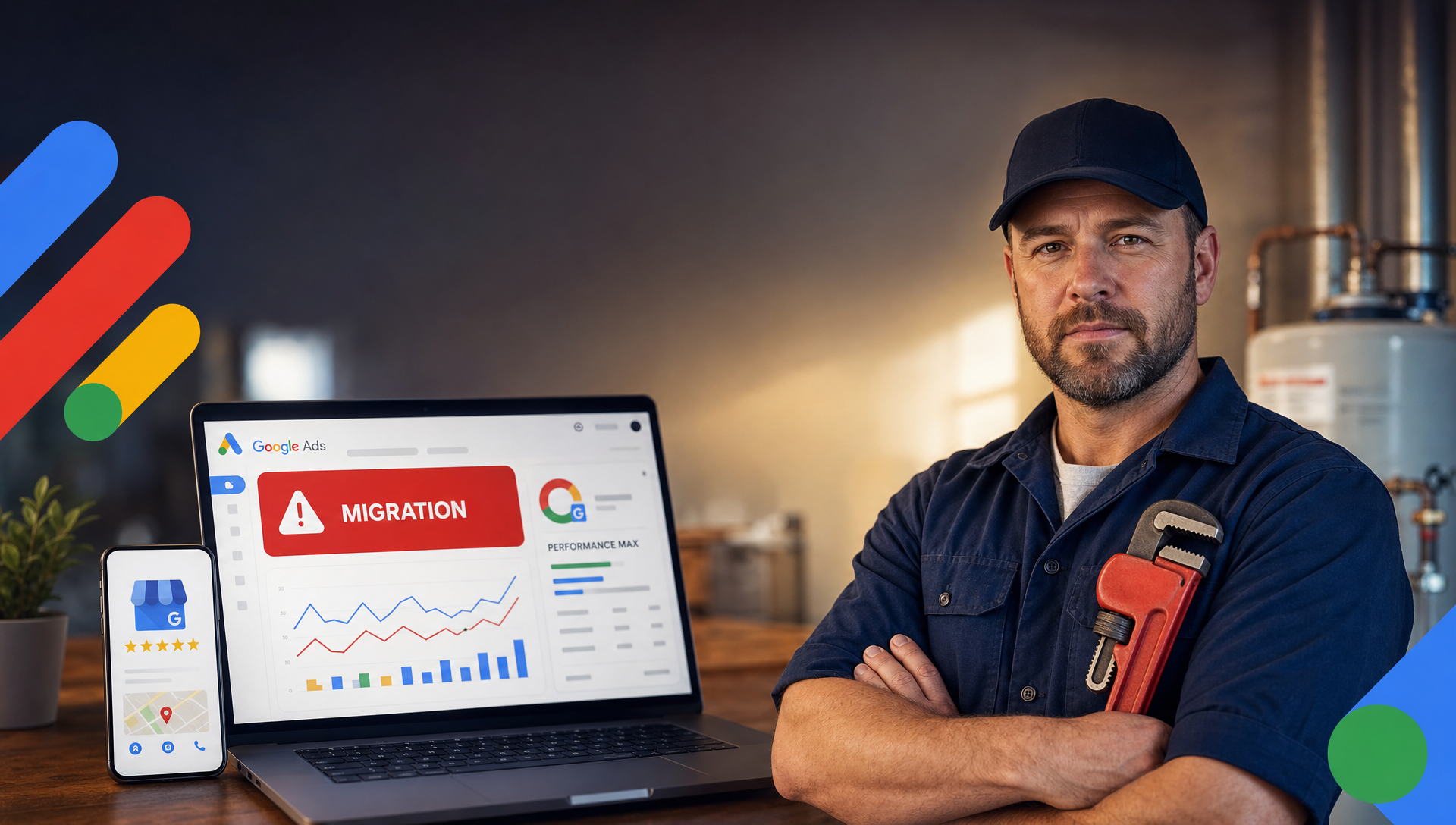
If you’re a plumber, HVAC tech, roofer, or any home service pro running Local Service Ads (LSAs), Google just handed you a deadline you can’t afford to ignore. Starting this month — August 2026 — the standalone LSA dashboard you’ve relied on for years is being folded directly into Google Ads under a brand-new campaign type: Performance Max for Pay-Per-Lead.
According to Joel, Director of Strategy at Hook Agency (which manages LSAs for the majority of its clients), most contractors have no idea this migration is already underway. Here’s everything you need to know — and exactly what to do before your dashboard disappears for good.
The Big Picture: This Isn’t the End of LSAs
Before the panic sets in, let’s be clear about what’s not changing:
- You’re still paying per lead, not per click. The pay-per-lead model that’s made LSAs valuable for contractors from day one isn’t going anywhere.
- Your Google Verified badge carries over with zero interruption — that trust signal still shows up for homeowners scrolling search results.
- You’re still limited to Google Search and Google Maps. This isn’t turning into a broad display network play.
- Your existing leads — calls, messages, bookings — transfer into the new system automatically.
So no, Google isn’t killing Local Service Ads as a channel. What’s actually happening is a merger of the management layer. The advertising engine underneath stays largely the same — what changes is who’s steering it, how much strategy it requires, and how much hands-on attention it needs to keep performing.
What’s Actually Changing
1. Your Google Business Profile now runs the show
Your ads will sync directly off your Google Business Profile (GBP) in real time — business name, address, hours, categories, all of it pulled straight from your profile. That means if your GBP is weak, outdated, or half-finished, your ads will be weak too. In some cases, they could stop serving entirely.
This is a fundamental shift. Previously, your LSA dashboard ran independently. Now it’s one connected system, and your GBP is the foundation underneath everything.
⚠️ Heads up: Making a major profile change — business name, address, or primary category — can trigger a 24-to-48-hour verification review. Don’t touch these fields right before or during your migration window.
2. Budgets shift from weekly to daily
You’re moving from a weekly budget structure to a daily budget using a standard 30.4-day pacing cycle. Google will auto-convert your old weekly average into a daily number — but don’t assume that math lines up with what you actually want to spend. Check it yourself the moment migration hits your account.
3. Bid strategy gets more sophisticated
You’ll now be able to set a target cost per action (CPA) — essentially telling Google what you’re willing to pay for a qualified lead. Previously, LSAs used a simpler cost-per-lead setup. This new system behaves more like a real Google Ads bid strategy, which means it needs actual strategy behind it — not a “set it and walk away” mentality.
4. Your historical data does NOT transfer
This is the change that trips up the most contractors. Here’s the split:
What carries over:
- Leads, contact info, message history, and older call recordings (these move into the Lead Manager inside Google Ads)
What does NOT carry over:
- Performance reports, spend history, cost-per-lead data, impressions, click data, and all campaign-level history
If you want a record of what worked and what didn’t, you need to export it yourself before migration happens. Once that dashboard is gone, so is your history — permanently.
What Every Contractor Needs to Do Right Now
- Export your historical LSA data today. Weekly spend, cost per lead, impressions, campaign-level performance — all of it. Don’t wait until migration week.
- Audit your Google Business Profile like it’s your entire ad account — because now, functionally, it is. Confirm your categories are accurate, hours are current, and business info is clean. Fix anything outdated before migration, not during.
- Watch for Google’s emails, but don’t wait on them to act. Account admins get a heads-up 14 days before migration, another reminder 7 days later, and a completion notice once it’s done. Don’t rely on Google to walk you through it in real time.
- Accept that “set it and forget it” is officially over. The old LSA dashboard let you set a budget and a target cost per lead, add a photo, and walk away for months. That era is done. This is now a real Google Ads campaign — it needs proper conversion tracking, an actual bid strategy, a clean GBP, and someone monitoring performance during the stabilization window.
How Long Until Things Settle?
Per Google’s own guidance, results can take up to two weeks to stabilize after the migration completes. If you’ve been running LSAs on autopilot, this transition is the moment that stops working.
Bottom Line
This update doesn’t kill Local Service Ads — it kills the hands-off version of managing them. Your Google Business Profile is now your ad account’s foundation, your budgeting and bidding require real strategy, and your historical performance data is on a countdown clock. Contractors who get ahead of this — cleaning up their GBP, exporting their data, and preparing for more active management — will come out the other side just fine. Those who wait for the migration email to think about it for the first time won’t be so lucky.

Leave a Reply